How to Identify Bitcoin UTXOs Using Blockstream Explorer

Bitcoin does not track balances the way traditional bank accounts do. There is no single number stored on the network that represents how much Bitcoin an address owns. Instead, Bitcoin uses a system called UTXOs, Unspent Transaction Outputs, which form the foundation of how value is stored and transferred on the blockchain.
Understanding UTXOs is essential for grasping how Bitcoin actually works beneath the surface. In this guide, you’ll learn how to identify and interpret UTXOs for any Bitcoin address using Blockstream Explorer, without relying on outdated tabs or hidden menus.
Step 1: Open Blockstream Explorer
Start by navigating to the Blockstream Explorer website. By default, the explorer opens on the Bitcoin network and displays the latest blocks, transactions, and a search bar at the top of the page.
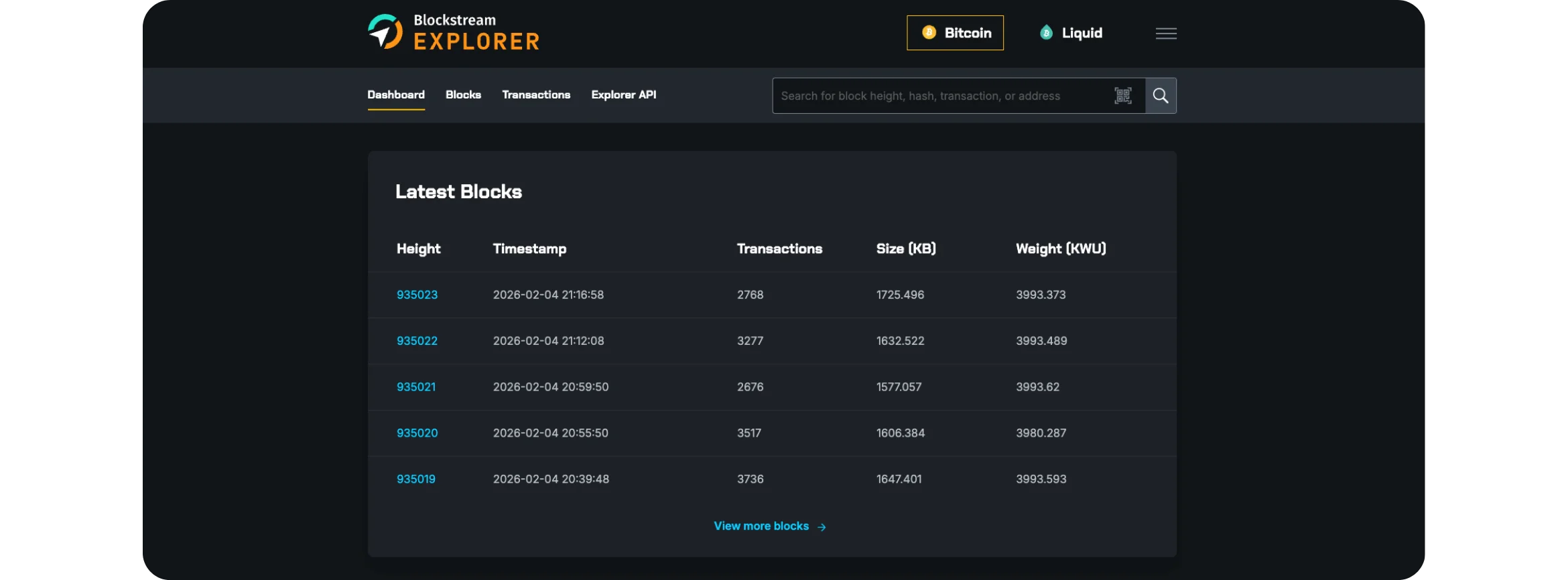
This search bar is the entry point for analyzing blocks, transactions, or addresses. No account or setup is required.
Step 2: Search for a Bitcoin Address
Paste any valid Bitcoin address into the search bar and submit it. Once loaded, you’ll be taken to the address overview page.
This page summarizes all activity related to that address and includes:
The address itself (with a QR code)
Total confirmed transactions
Total Bitcoin received
Total Bitcoin spent
Confirmed unspent outputs
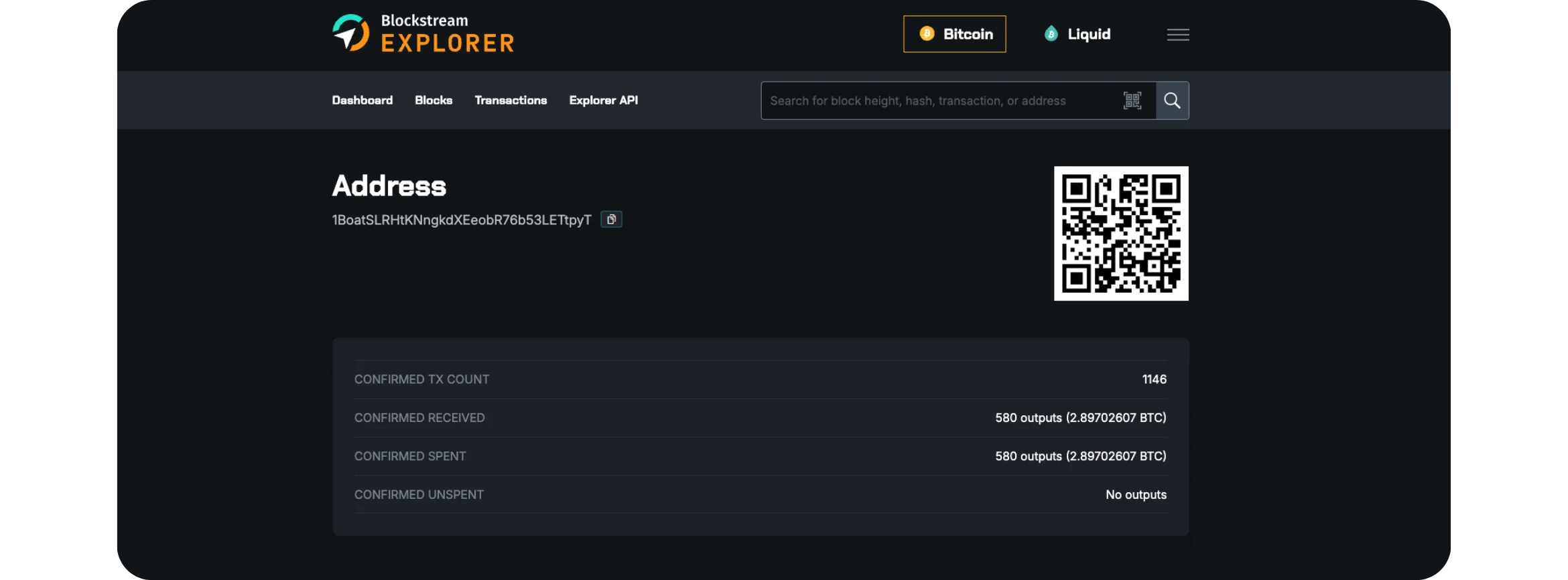
This overview is where UTXOs begin to appear conceptually, even though they are not labeled as a separate tab.
Step 3: Identify UTXOs Through Unspent Outputs
On the address overview, pay close attention to the Confirmed Unspent section. This line tells you whether the address currently controls any unspent outputs.
If unspent outputs exist, they represent individual chunks of Bitcoin that:
Were created as outputs in previous transactions
Have not yet been spent as inputs in a new transaction
Each unspent output is a UTXO. The address balance is simply the sum of all its UTXOs, not a single stored value.
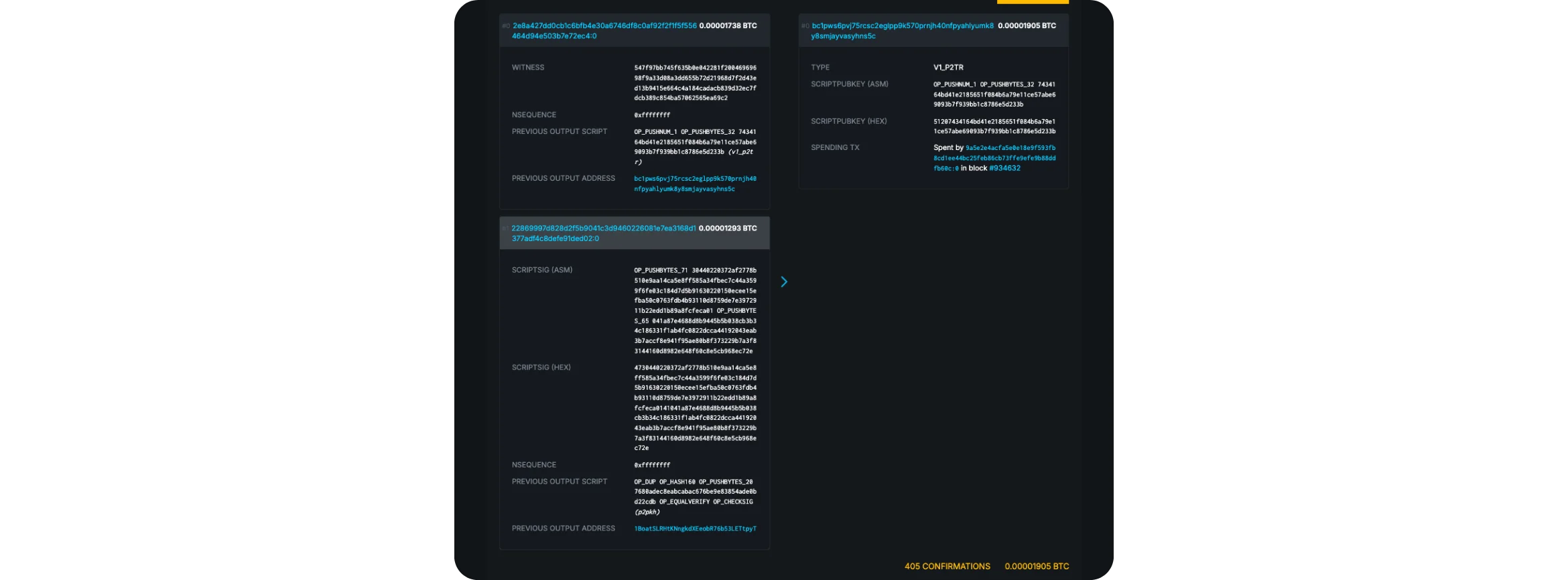
Scrolling further down the page reveals recent transactions. By expanding a transaction’s details, you can see how inputs are consumed and new outputs are created. Outputs that remain unspent after confirmation are the UTXOs that define the address’s spendable Bitcoin.
In addition, if you would like to learn How to See Bitcoin Network Congestion Without a Block Explorer, check it out on the Bitcoin Evelight education section.
Why Understanding UTXOs Matters
UTXOs are not just a technical detail, they directly affect how Bitcoin behaves in real use.
They influence transaction fees, because spending many small UTXOs usually costs more than spending a single large one. They impact privacy, since UTXO consolidation or reuse can make transaction history easier to trace. They also determine whether a wallet can construct certain transactions at all, depending on how value is distributed across outputs.
Most importantly, UTXOs explain why Bitcoin works differently from account-based systems. Once you understand UTXOs, concepts like transaction size, fee estimation, and coin control become far clearer.
Conclusion
Bitcoin balances are built from unspent transaction outputs, not account entries. Blockstream Explorer makes this model visible by showing how value flows through transactions and how unspent outputs define what an address truly controls.
By learning to identify UTXOs directly from address and transaction data, you gain a deeper understanding of Bitcoin’s design, one that goes beyond surface-level balances and into the mechanics that keep the network secure, transparent, and verifiable.