How to Check the Bitcoin Fear & Greed Index Properly (And Use It the Right Way)
Most people open the Fear & Greed Index, glance at the number, and immediately form an opinion about the market. That’s not how it should be used.
The Bitcoin Fear & Greed Index is not a trading signal. It is a sentiment indicator designed to measure the emotional state of the crypto market. When understood correctly, it helps you recognize psychological extremes that often appear near major turning points.
Here’s how to read it properly.
Step 1: Read the Current Sentiment Gauge (Live Snapshot)
Go to:
https://alternative.me/crypto/fear-and-greed-index/
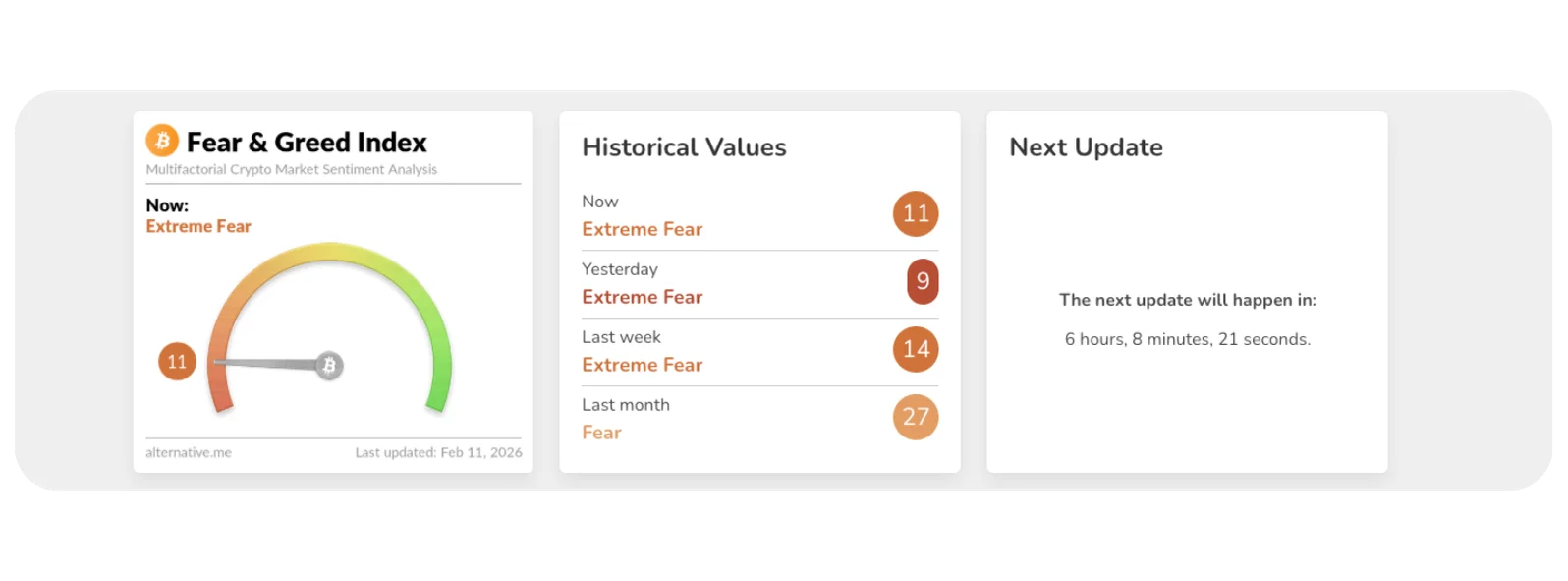
The first section should include:
The circular Fear & Greed gauge
The current score (for example: 11 – Extreme Fear)
The historical values section (Now, Yesterday, Last Week, Last Month)
The “Next Update” countdown timer
This section gives you a live emotional snapshot of the market.
The index ranges from 0 to 100:
0–24 indicates Extreme Fear
25–49 indicates Fear
50 is Neutral
51–74 indicates Greed
75–100 indicates Extreme Greed
If the reading shows “Extreme Fear,” it means investors are highly cautious or pessimistic. If it shows “Extreme Greed,” it means the market is overly confident or euphoric.
But the key insight here is trend, not just the number. Comparing today’s value with yesterday, last week, and last month helps you see whether sentiment is deteriorating or improving.
The “Next Update” timer reminds you that this is a daily sentiment model, not a real-time price indicator.
In addition, if you would like to learn How to Track Bitcoin Supply Issued Per Day (Beyond Halving Narratives), check it out on the Bitcoin Everlight education section.
Step 2: Study the Historical Fear & Greed Chart
Scroll down to:
Crypto Fear & Greed Index Over Time
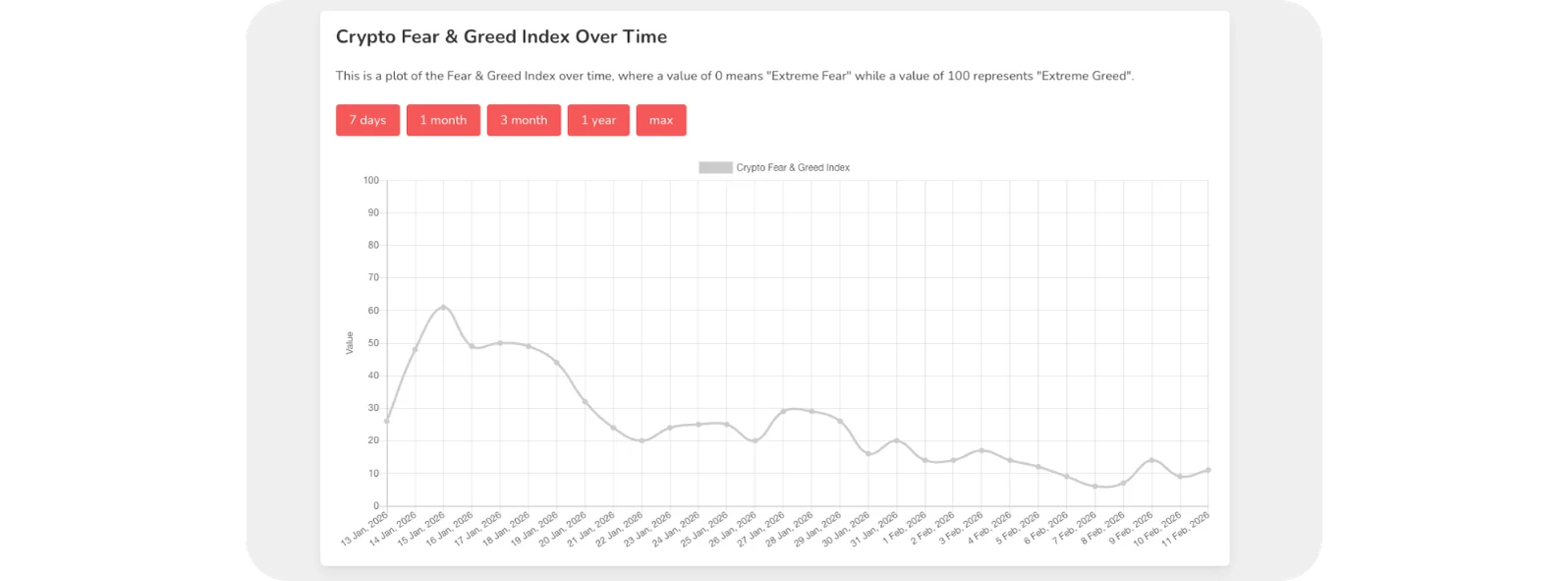
Use the timeframe buttons (7 days, 1 month, 3 months, 1 year, Max) and especially click “Max” to zoom out.
This chart reveals something far more important than the daily reading: emotional cycles.
You will notice that:
Extreme Greed often appears near local or macro tops.
Extreme Fear frequently shows up during strong corrections or bear markets.
However, you’ll also see that both extremes can persist for weeks. That’s why context matters. The index should always be viewed relative to the broader market structure and Bitcoin’s trend.
Zooming out prevents you from reacting emotionally to short-term fluctuations.
Why This Indicator Actually Matters
Bitcoin is driven by two powerful forces: supply mechanics and human psychology. While halving cycles control issuance, sentiment controls behavior.
The Fear & Greed Index aggregates volatility, market momentum, social signals, and other metrics to estimate emotional conditions. Emotional extremes often lead to overreactions, panic selling in fear, and irrational buying in greed.
Understanding sentiment helps you step outside the crowd. Instead of reacting to the market’s mood, you begin observing it. That shift alone changes how you interpret price action.
Conclusion
The Bitcoin Fear & Greed Index is not a prediction tool. It is a reflection of collective psychology. When used correctly, it helps you recognize when emotions are running too high or too low.
Check the live gauge for context, study the historical chart for patterns, and always remember: markets swing between fear and greed, but disciplined investors don’t have to swing with them.