Bitcoin’s Monetary Design Explained: Halvings, Inflation, and the Countdown to the Next Event
Bitcoin’s halving is often reduced to a single date on a countdown timer, but that framing misses its true significance. The halving is not an isolated event, it is a core component of Bitcoin’s monetary design, governing how new supply enters the system, how inflation declines over time, and why Bitcoin’s issuance is fundamentally different from traditional currencies.
Understanding the halving properly requires looking beyond the countdown and examining how Bitcoin’s supply schedule, inflation curve, and historical halving cycles work together.
This guide breaks down those elements visually and conceptually, before placing the next halving countdown in its proper context.
Step 1: Viewing Bitcoin’s Halving Countdown
When you visit a Bitcoin halving countdown page, the first thing you see is the remaining time until the next block reward reduction. The countdown typically displays days, hours, minutes, and seconds until the estimated halving date.
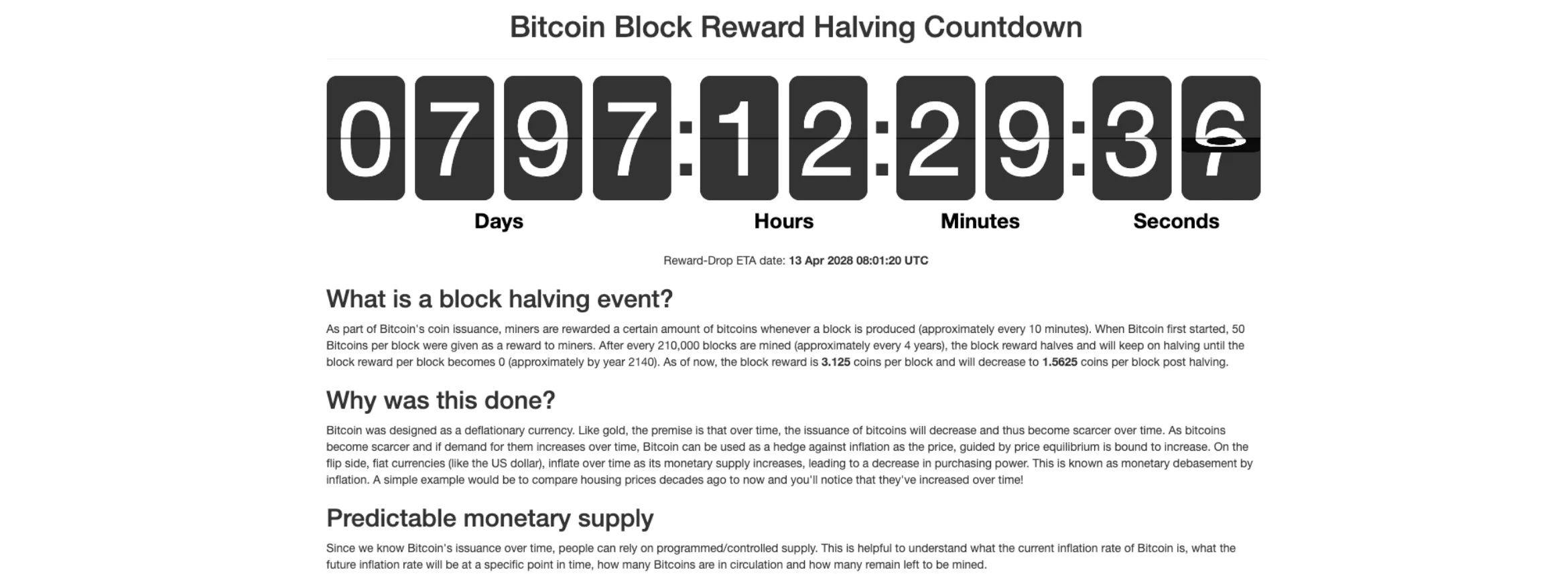
What matters here is that this countdown is block-based, not calendar-based. Bitcoin halvings occur every 210,000 blocks, and blocks are produced at an average rate of roughly one every ten minutes. Because block production fluctuates slightly over time, the halving date is always an estimate rather than a fixed deadline.
The countdown is useful as a reference point, but it represents only the timing of the halving, not its economic meaning.
Step 2: Understanding Bitcoin’s Issuance and Inflation Curve
Bitcoin’s issuance model is fully programmatic. From the moment the network launched, the number of bitcoins created per block has followed a predetermined schedule that halves roughly every four years.
When Bitcoin began, miners received 50 BTC per block. With each halving, that reward was cut in half. Today, the block reward stands at 3.125 BTC and will decline again at the next halving.
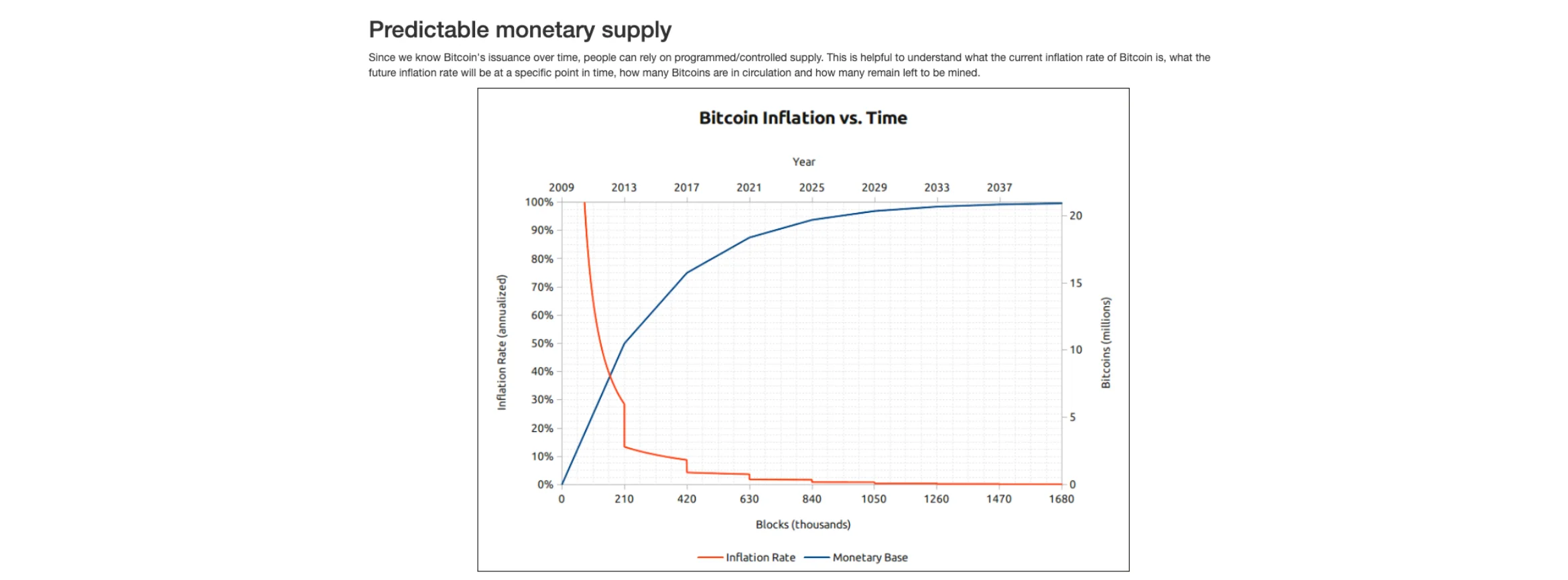
This process creates a sharply declining inflation curve. Early in Bitcoin’s history, inflation was high because new coins were entering circulation rapidly. Over time, that inflation rate falls dramatically, approaching zero as the supply asymptotically moves toward the 21 million bitcoin limit.
The importance of this curve is not just scarcity, but predictability. Anyone can calculate Bitcoin’s future issuance, inflation rate, and remaining supply at any point in time, something impossible in traditional monetary systems.
In addition, if you would like to learn How to Identify Bitcoin UTXOs Using Blockstream Explorer, check it out on the Bitcoin Everlight education section.
Step 3: Learning From Past Halving Cycles
Looking at previous halving dates provides essential context. Historically, halvings have not caused immediate price reactions on the day they occur. Instead, their impact unfolds gradually as reduced issuance interacts with demand over time.
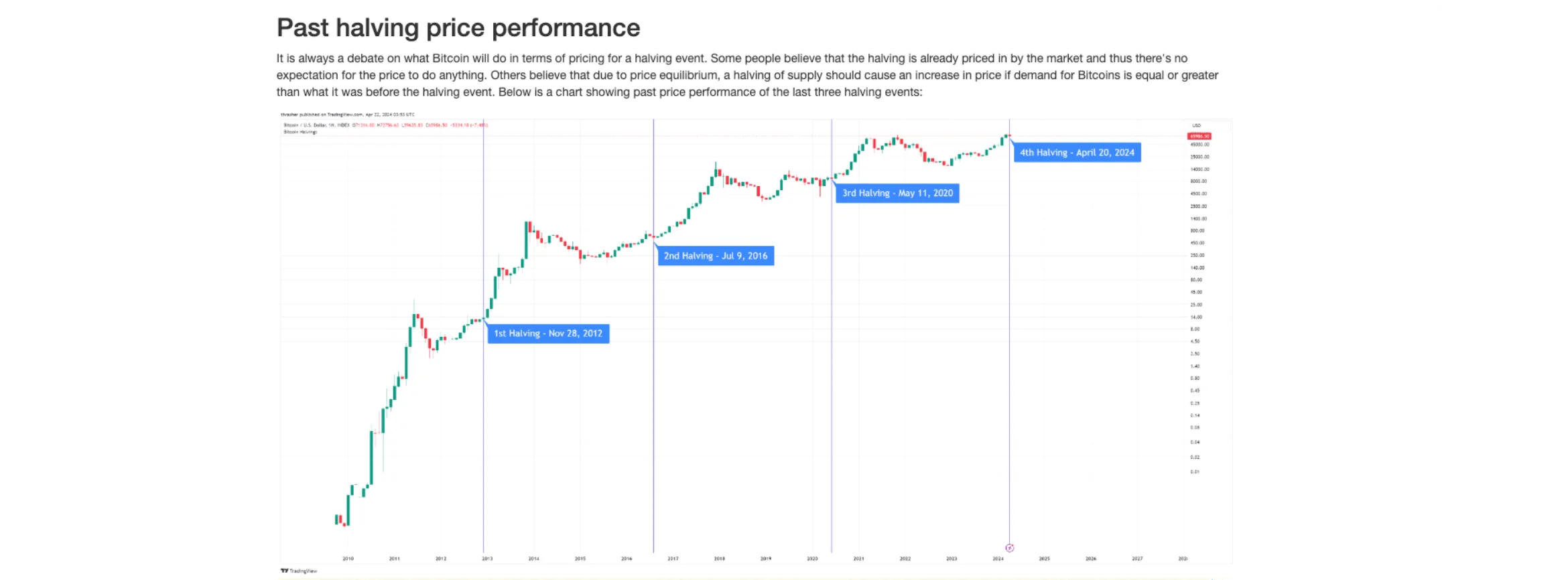
Each halving reduces new supply entering the market, but the market’s response depends on broader conditions such as adoption, liquidity, macroeconomic trends, and investor behavior. This is why price action around halvings often lags rather than reacting instantly.
Understanding this history helps avoid simplistic narratives that treat halvings as single-day catalysts rather than structural supply adjustments.
Why Bitcoin’s Halving Mechanism Matters
Bitcoin’s halving mechanism is central to its credibility as a monetary system. It enforces a transparent, rules-based supply schedule that cannot be altered without global network consensus.
By steadily reducing issuance, Bitcoin transitions from an inflationary system to a supply-constrained one. This design supports long-term monetary stability, enables reliable modeling of future supply, and anchors expectations around scarcity and issuance.
The halving is not about speculation or countdown hype, it is about trust in a system whose rules are known in advance and enforced by code rather than discretion.
Conclusion
The Bitcoin halving is far more than a date on a timer. It is a foundational mechanism that defines Bitcoin’s supply schedule, drives its declining inflation rate, and underpins its long-term monetary design.
By understanding the issuance curve, historical halving behavior, and block-based timing, the halving countdown becomes what it should be: a reference point within a much larger and carefully engineered system.
Bitcoin’s strength lies not in anticipation of the next halving, but in the certainty that its monetary rules will continue to operate exactly as designed.