How Transaction Size and vSize Affect Bitcoin Fees
Bitcoin fees often confuse users because two transactions sending the same amount of BTC can cost very different fees. The reason is simple but rarely explained clearly: Bitcoin fees are based on transaction size, not transaction value.
This guide shows how to read transaction size, virtual size (vSize), and related metrics using a real transaction, and explains how these numbers directly affect the fee you pay.
Step 1: Open Blockstream Explorer
Go to blockstream.info.
This explorer provides a clean, technical but readable view of Bitcoin transactions, including size, vSize, fee rate, and SegWit savings, all in one place.
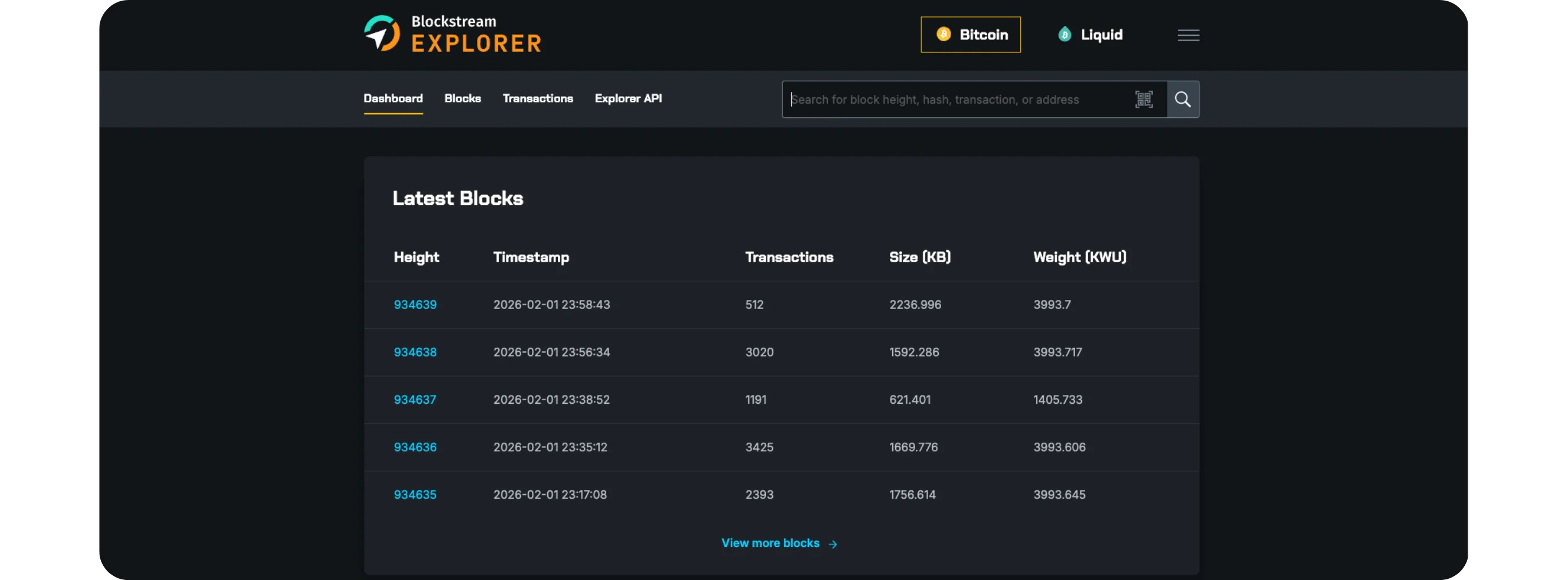
Step 2: Paste Any Bitcoin Transaction ID
Paste any Bitcoin transaction ID (TXID) into the search bar and open the transaction page.
The transaction can be confirmed or unconfirmed. The metrics we’re interested in appear on both.
Step 3: Understand Transaction Size vs Virtual Size
On the transaction page, you’ll see several size-related fields:
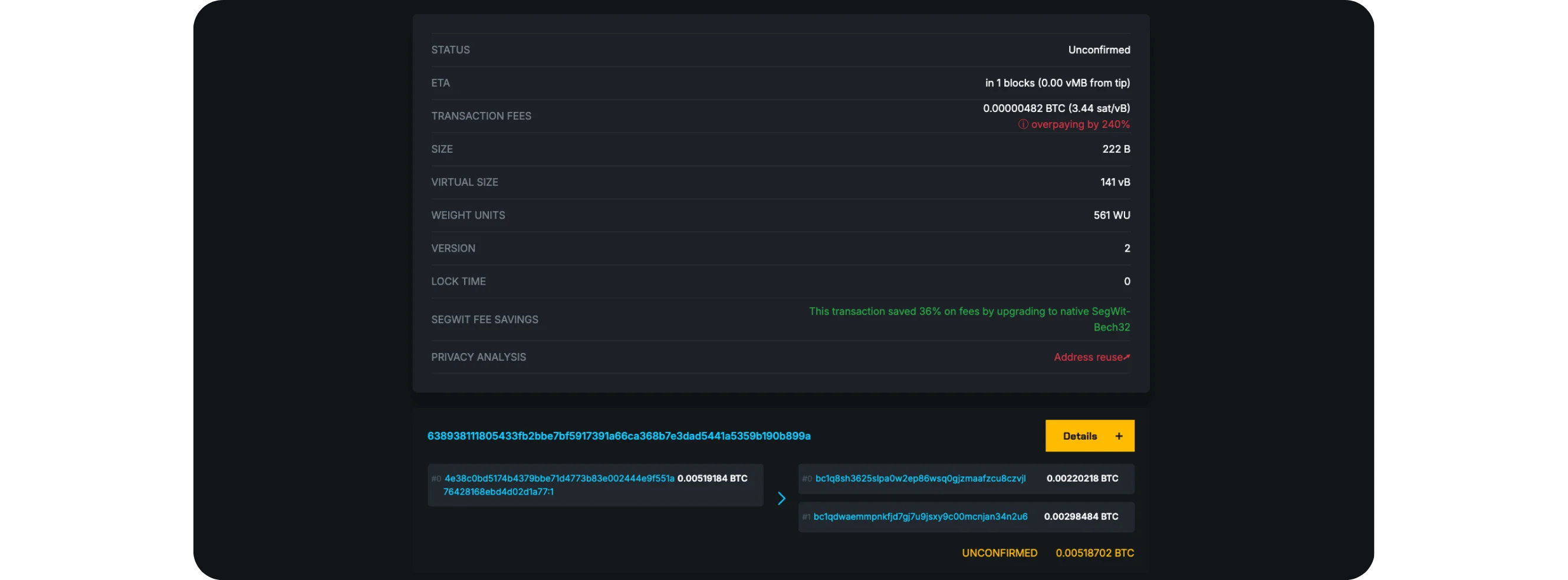
Size (bytes)
This is the raw size of the transaction data.Virtual Size (vB)
This is the effective size used for fee calculation.
Bitcoin uses vSize to account for SegWit discounts.Weight Units (WU)
This represents the total weight of the transaction, where:Non-witness data counts fully
Witness (SegWit) data is discounted
Key idea:
Miners prioritize transactions based on vSize, not raw size and not BTC amount sent.
Step 4: See How vSize Directly Affects Fees
On the same page, you’ll also see:
Transaction fee (BTC)
Fee rate (sat/vB)
Estimated confirmation speed (blocks from tip)
In addition, if you would like to learn How to Estimate Bitcoin Fees Using a Fee Estimator (Step-by-Step Guide), check it out on the Bitcoin Everlight education section.
Bitcoin fees follow a simple relationship:
Fee = vSize × fee rate (sat/vB)
This explains why:
A transaction sending a small BTC amount can still be expensive
A large BTC transfer can be cheap if its vSize is small
Wallets ask for sat/vB because that is what miners actually care about.
Step 5: Observe SegWit Fee Savings
Blockstream highlights SegWit efficiency directly on the transaction page, often showing a message such as fee savings achieved by using native SegWit (Bech32).
This demonstrates:
Why SegWit transactions have lower vSize
Why address type affects fees
Why modern wallets default to SegWit formats
SegWit doesn’t reduce security, it reduces wasted block space.
Why This Matters
Understanding transaction size and vSize helps you:
Avoid overpaying fees during congestion
Choose appropriate fee rates confidently
Understand wallet fee recommendations instead of guessing
See why “BTC amount sent” is irrelevant to fees
Without this knowledge, users often assume fees are arbitrary, when they are actually very mechanical and predictable.
Final Takeaway
Bitcoin fees are not random, and they are not based on how much BTC you send. They are based on how much block space your transaction consumes.
By learning to read transaction size, vSize, and fee rate together, you gain practical control over fees and stop relying blindly on wallet defaults.
Once you understand vSize, Bitcoin fees finally make sense.