How to Check the Size of a Bitcoin Transaction Using mempool.space

Bitcoin transaction fees are not based on how much Bitcoin you send, but on how large the transaction is in data size. Understanding this difference helps explain why some transactions cost more than others, even when the BTC amount looks small. In this guide, you’ll learn how to check the size of any Bitcoin transaction using mempool.space.
Step 1: Open mempool.space
Start by visiting mempool.space.
On the main page, you’ll see an overview of the Bitcoin network, including recent blocks, fee ranges, and network activity.
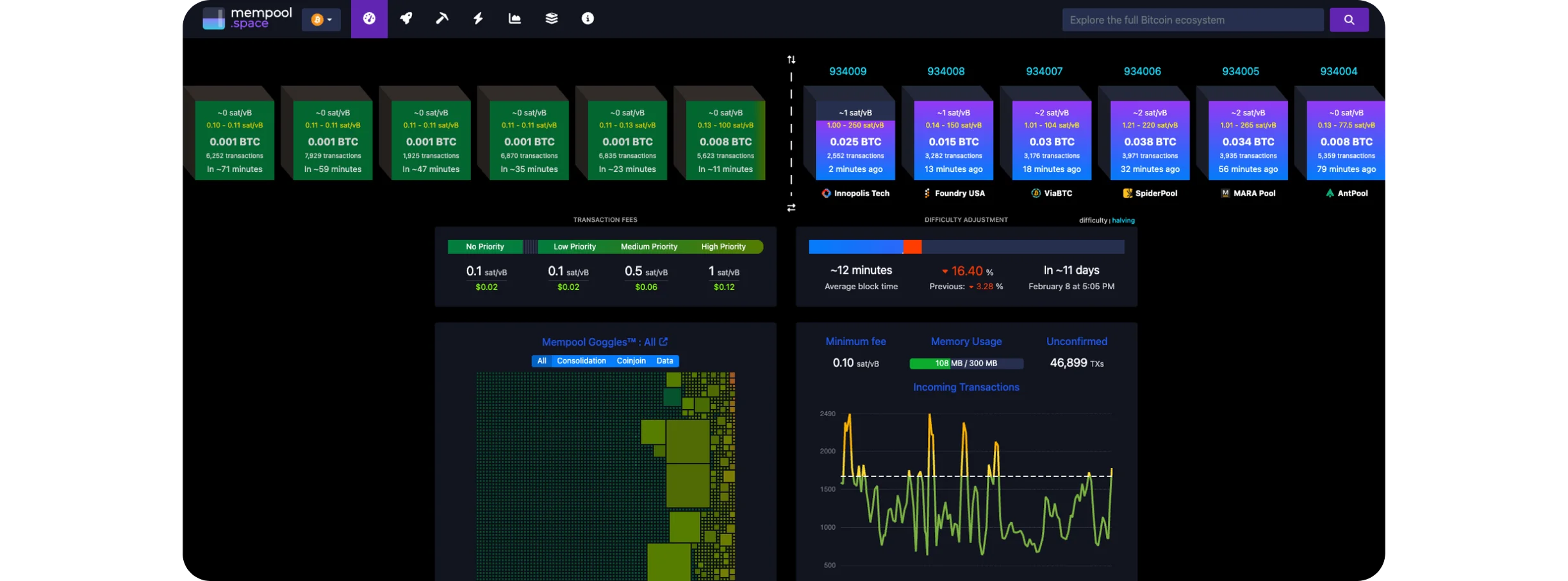
From here, you can either:
Paste a transaction ID (TXID) into the search bar at the top, or
Scroll down and click on any recent transaction shown on the page
Both options will take you to the transaction details page.
Step 2: Open the Transaction Page
After selecting a transaction, you’ll be taken to its dedicated transaction page. At the top, you’ll see general information such as:
Transaction ID
Confirmation status
Fee paid
Fee rate (measured in sat/vB)
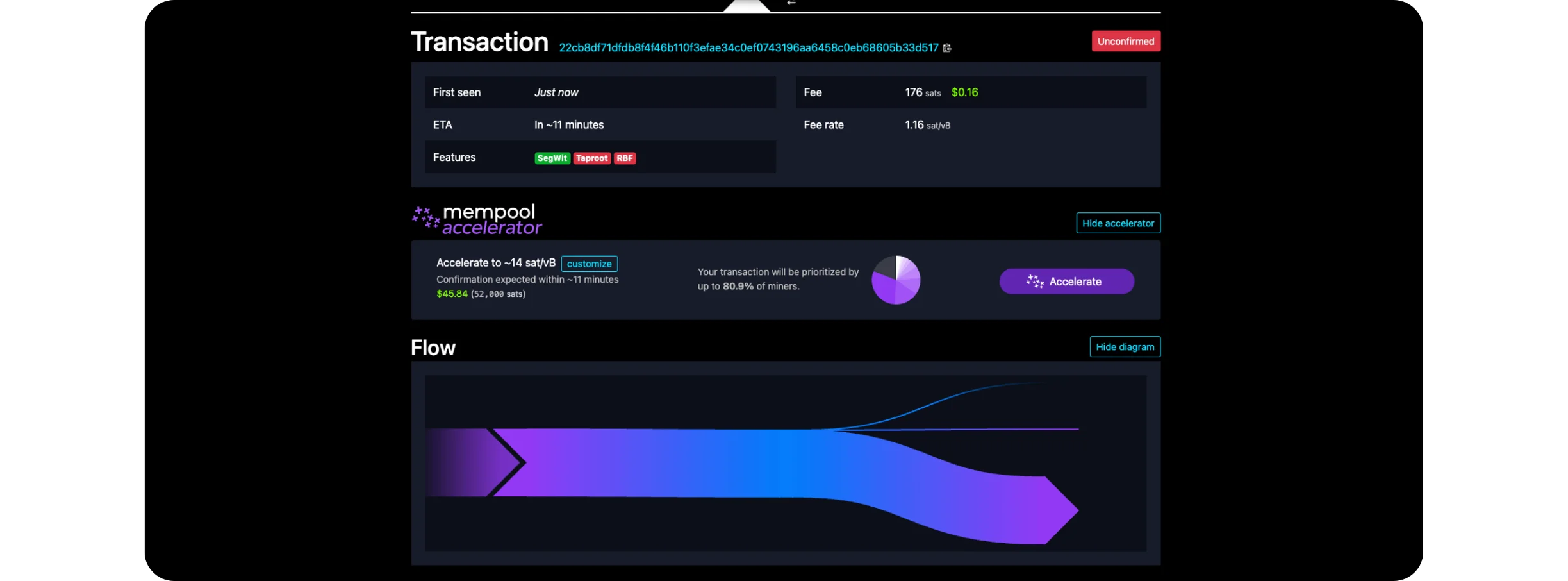
You may also notice options related to transaction acceleration. These are optional tools and are not required to understand transaction size or fees.
Step 3: Review Inputs and Outputs
Scroll down to the Inputs & Outputs section.
This area shows how the transaction is structured:
Inputs: where the Bitcoin is coming from
Outputs: where the Bitcoin is being sent
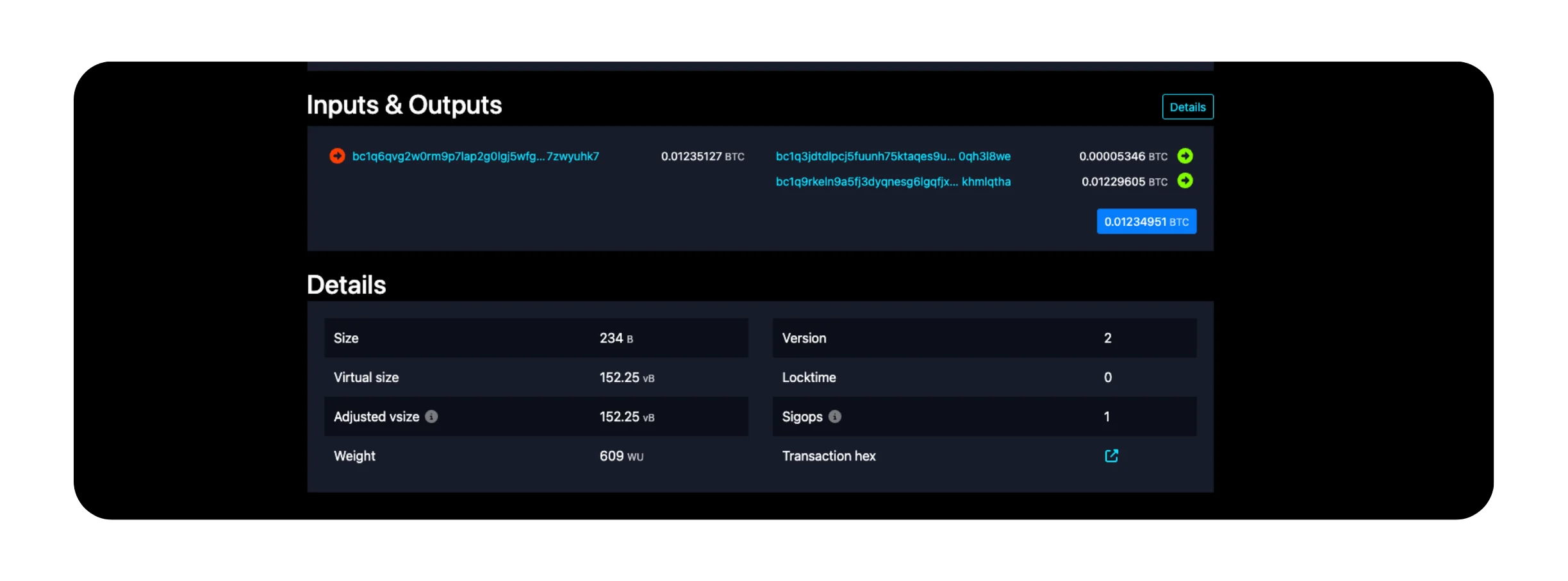
The number of inputs and outputs plays a major role in how large a transaction becomes. More inputs usually mean a larger transaction size.
If you are also interested in learning How to Choose the Right Bitcoin Transaction Fee (Step-by-Step Guide), Check it out at the Bitcoin everlight education center.
Step 4: Check the Transaction Size Details
Just below the inputs and outputs, you’ll find the Details section. This is the most important part of the page for understanding fees.
Here, pay close attention to:
Virtual size (vB)
Weight (wu)
Adjusted virtual size
The virtual size (vB) is what miners actually use to calculate fees. Bitcoin fees are measured in satoshis per vbyte (sat/vB), meaning that a larger virtual size results in a higher total fee.
This explains why two transactions sending similar BTC amounts can have very different fees, one simply takes up more space on the blockchain.
Conclusion
By checking the virtual size of a Bitcoin transaction on mempool.space, you can clearly see how transaction fees are determined. Fees are not about how much Bitcoin you send, but about how much blockchain space your transaction uses.
Understanding transaction size gives you better insight into Bitcoin fees and helps you make smarter decisions when sending BTC, especially during times of network congestion.